

Why did my buttercream cake crack?
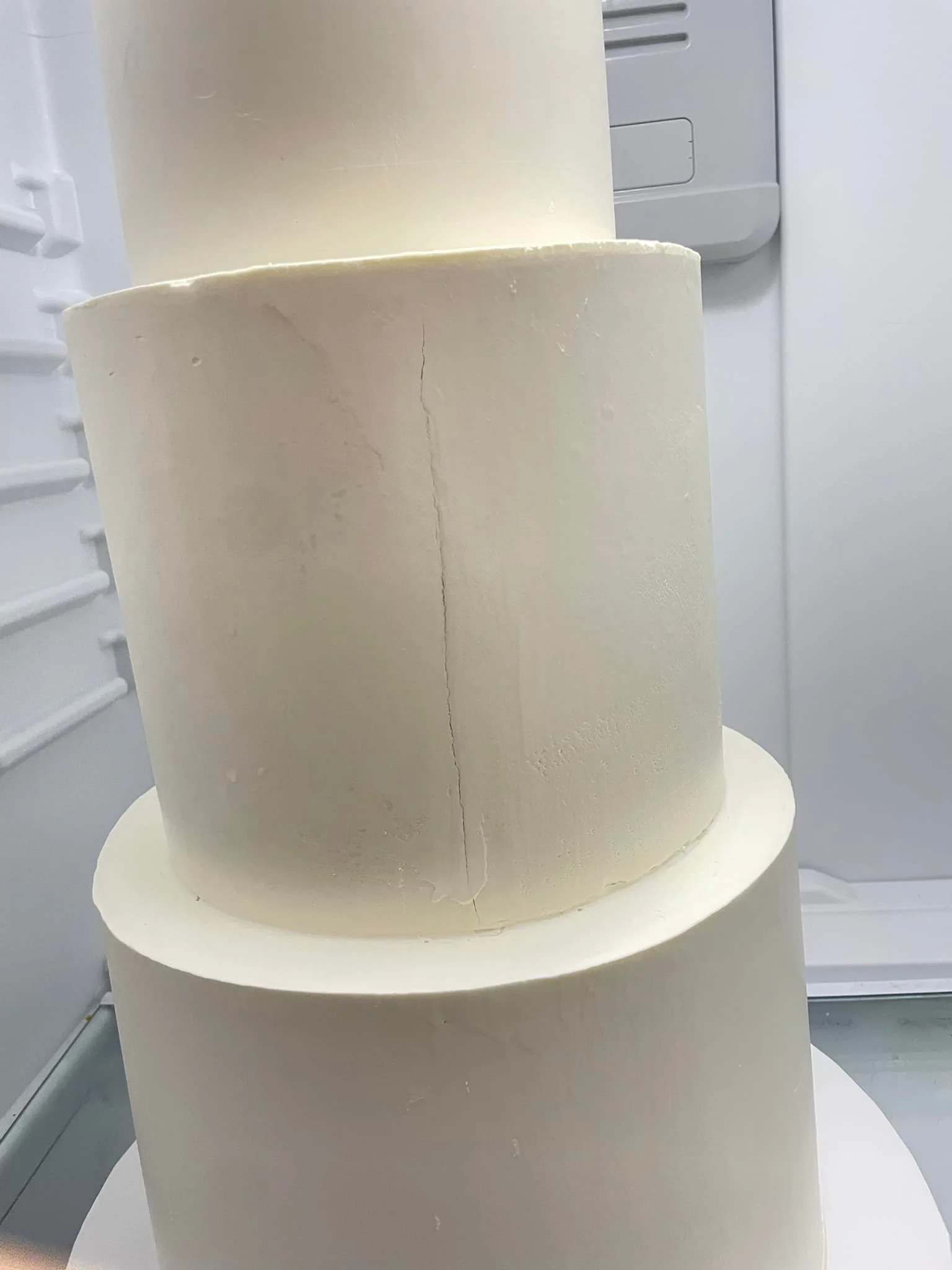
Photo by DTC student Terri Ramsay.
Cracks are the last thing you want to see on your beautiful, finished cake, as they usually occur AFTER the cake has been iced and decorated. There’s nothing more disheartening than spending hours perfecting something, only for it to acquire imperfections once you’re finished with it.
Cracks are caused by movement.
It’s that simple. Movement causes cracks. Remember that.
Where the cracks occur and the direction in which they occur can tell you a lot about what caused them. Let’s examine, shall we?
Types of Cracks and How to Prevent Them:
1. Cracks at the Bottom of Your Buttercream Cake
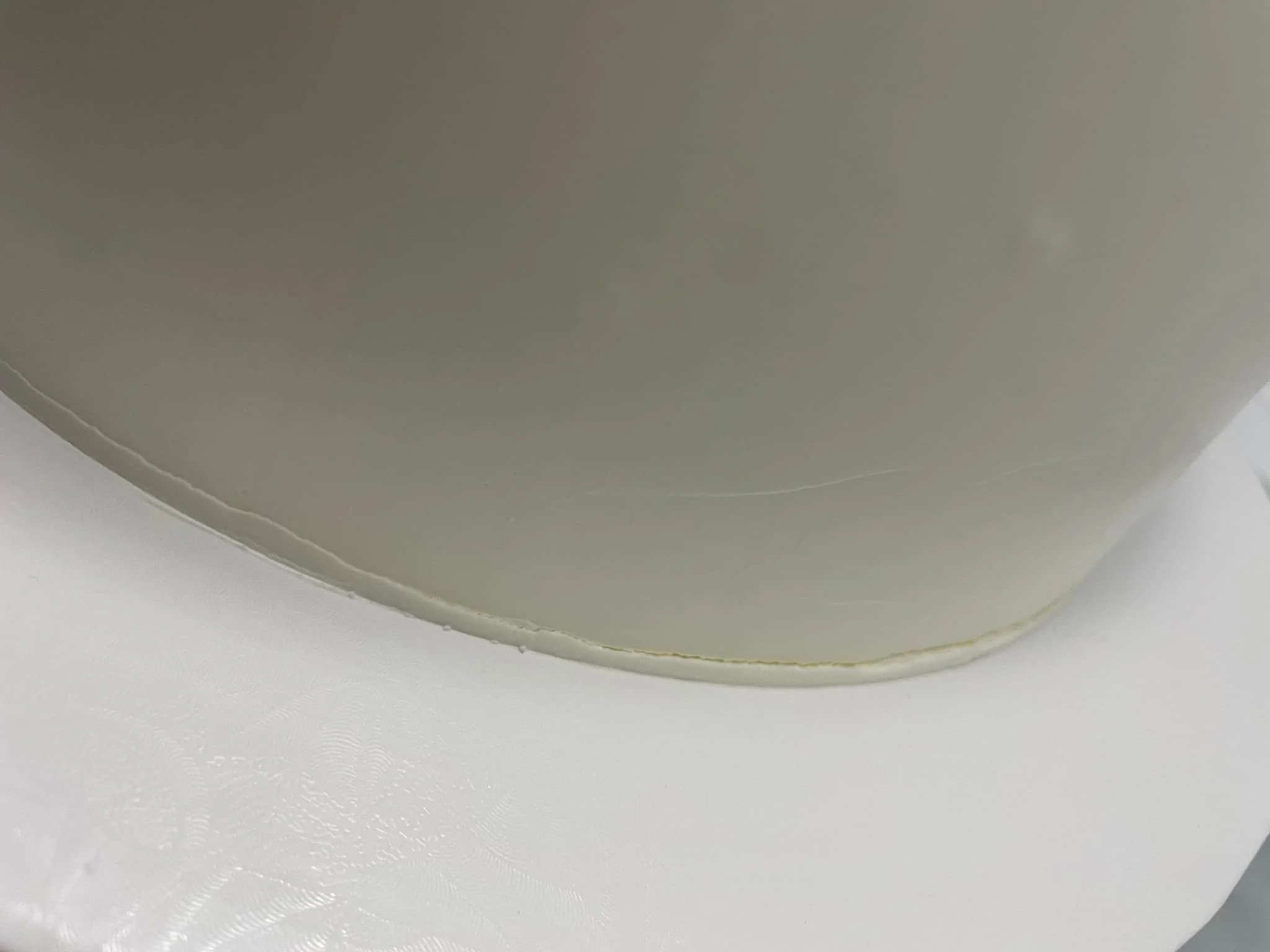
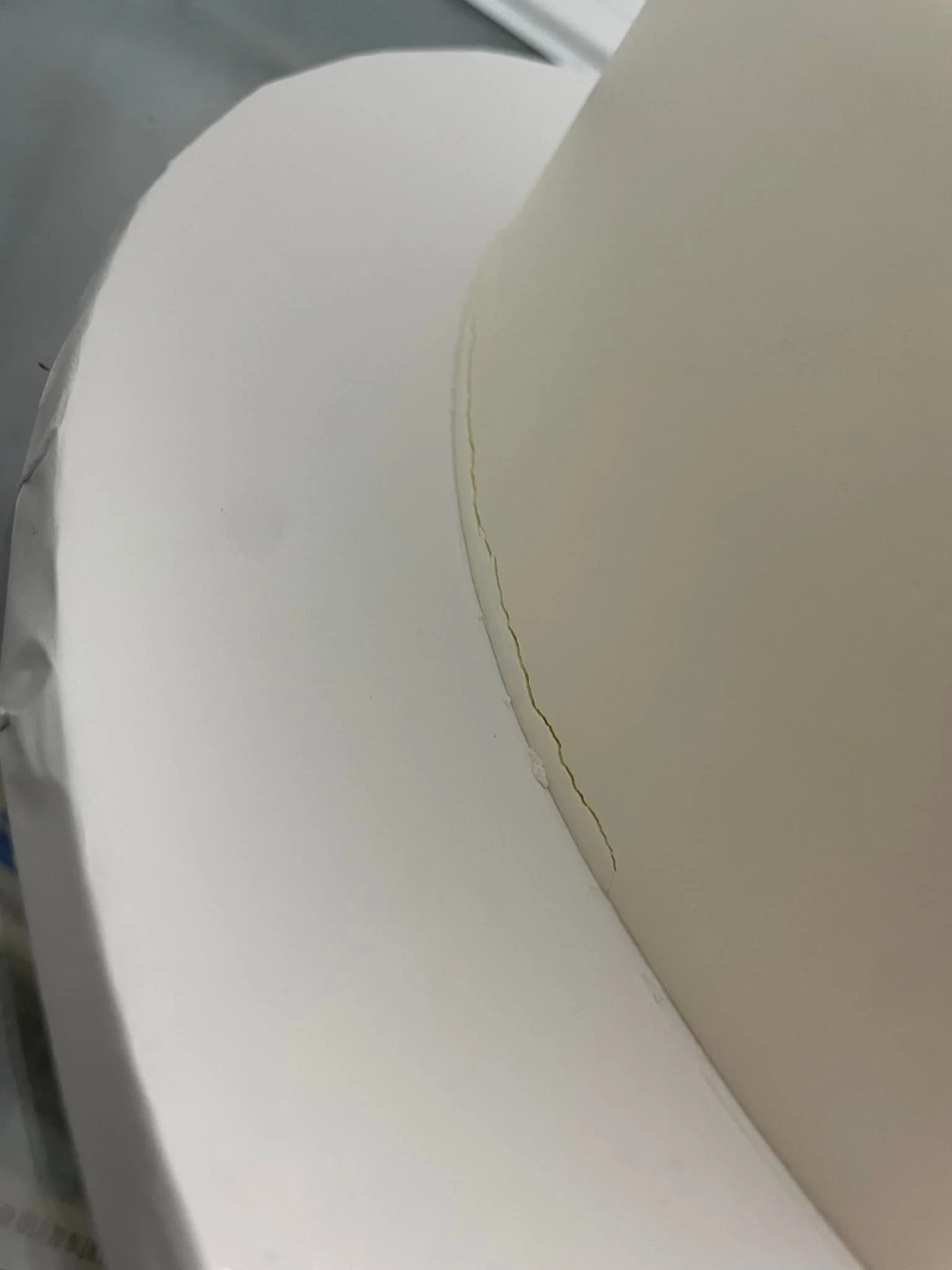
There are two very common places where buttercream cakes tend to crack. The first is at the very bottom where the cake meets the board and it has everything to do with the strength of your cake board. If you’re using a cake board that is too thin which cannot support the weight of the cake that’s sitting on it, it is going to bend when you grab at it to lift the cake up. When the cake board bends, it pulls away from the bottom of the cake thereby, creating cracks in this area.
I always suggest using MDF cake boards but sometimes even those aren’t enough to hold the weight of your cake. If your cake is particularly heavy, stick two MDF boards together or use a really thick drum board.
2. Horizontal Cracks
The second most common place to see cracks is in the middle zone of a cake tier, horizontally. When this occurs, you’ll find that these cracks usually correspond with the location of the cake filling in between two cake layers.
Horizontal cracks occur because cake layers have moved, usually due to fillings that are too wet or too soft.
There are a number of factors to consider when trying to combat horizontal cracks. However, the bottom line is, you have a structure issue. How can you prevent your cake layers from moving? This could be:
Using a more sturdy dam such as chocolate ganache to keep your soft fillings from seeping out and moving.
Using a cake that has better structure, such as buttercake or our DTC cakes instead of sponges.
Inserting dowels to help keep the layers in place.
3. Vertical or Random Pattern Cracks
This last type is less common than the first two, but it happens. Vertical or random pattern cracks can occur anywhere on your cake. Although they’re still caused by movement, this movement is on a molecular level. This movement has to do with the water molecules in your buttercream contracting, expanding or even evaporating.
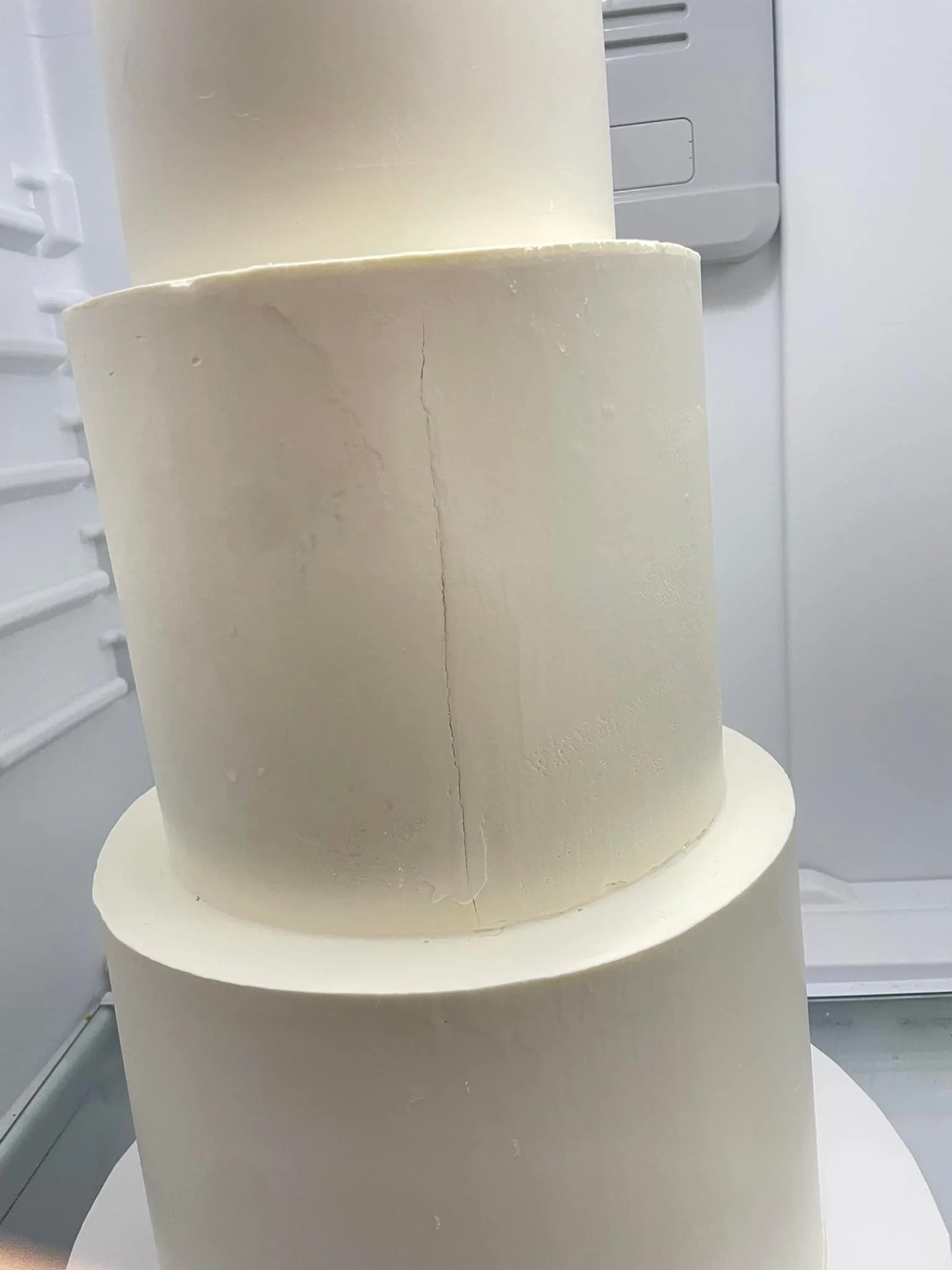
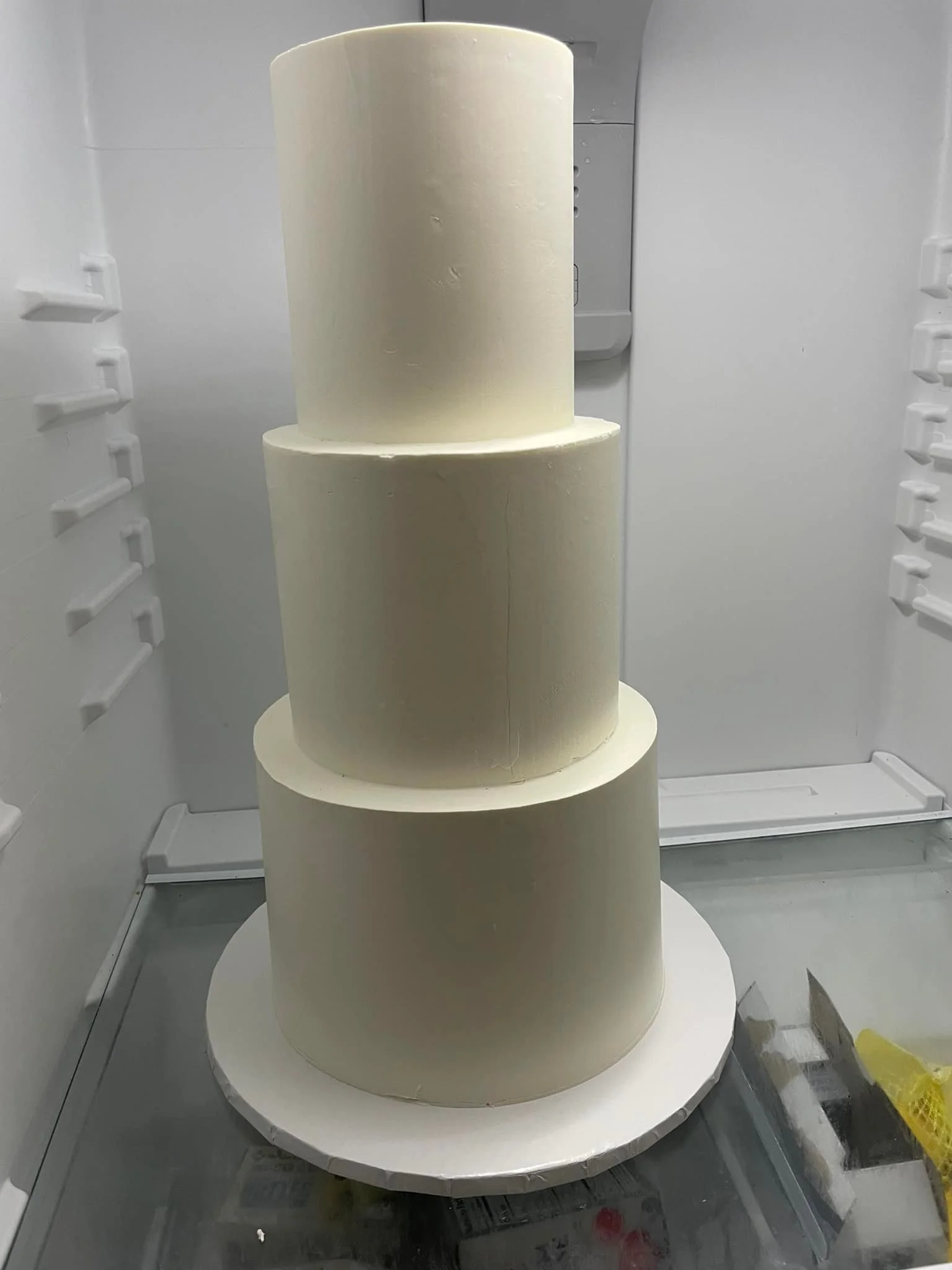
Without getting into too many details about the chemistry of water molecules, just know that the water molecules in your buttercream move differently when they’re at room temperature, fridge temperature (4C) and freezing temperature. Allowing your cake to rapidly move in and out of these 3 temperature zones can cause the water molecules to contract, expand, and even evaporate. These are the movements that cause cracks.
👉 In plain cake making terms, if you find vertical or random pattern cracks on your cake, chances are you’ve left the cake in the freezer for too long or your fridge is too cold.
👉 If you use the freezer in the buttercream cake making process like we do, only use it in short periods of time to prevent the buttercream from actually freezing.
👉 If your fridge is too cold (especially at the back), adjust the temperature.
👉 It’s also important that you store your buttercream cakes in an airtight container or a box while they’re in the fridge, to prevent the buttercream from drying out and causing cracks.
👉 Also, avoid filling and covering a cake with frozen cake layers. Water molecules contract when frozen then expand as they become warmer. If you cover the cake while the cake layers are frozen, the expanding movement of the water molecules as the cake returns to room temp causes cracks. To avoid this, always use fridge cold cake layers instead of frozen.
BUTTERCREAM CAKE MASTERY
Understand the cracks. Know what to change.
Learn the why behind the recipes and steps, so you can troubleshoot when things go wrong and make decisions with confidence.
