
Who’s Charles?
In 1675, King Charles II of England issued a proclamation to end the legality of coffeehouses.
The King’s argument was that coffee houses disturbed the peace of the realm and promoted idleness and some scurrilous and defamatory rumor-mongering. Of course the true reason why King Charles II wanted to get rid of these meeting places was of political nature. He suspected coffeehouses offered a perfect opportunity for plotting sedition and treason among the population.
The law to ban coffee houses was passed on December 29, 1675, and was supposed to become active on January 10, 1676, but it was abolished on January 8. The undoing of the ban was backed by several ministers of Charles II, who themselves were lovers of coffee.
In 2013, Don’t Tell Charles defied the King’s order and opened as a specialty coffee and dessert house. Today, although coffee is no longer a part of our business no one wants to update Charles with this news either. We’re sure he’d love some cake though so would someone tell Charles please!
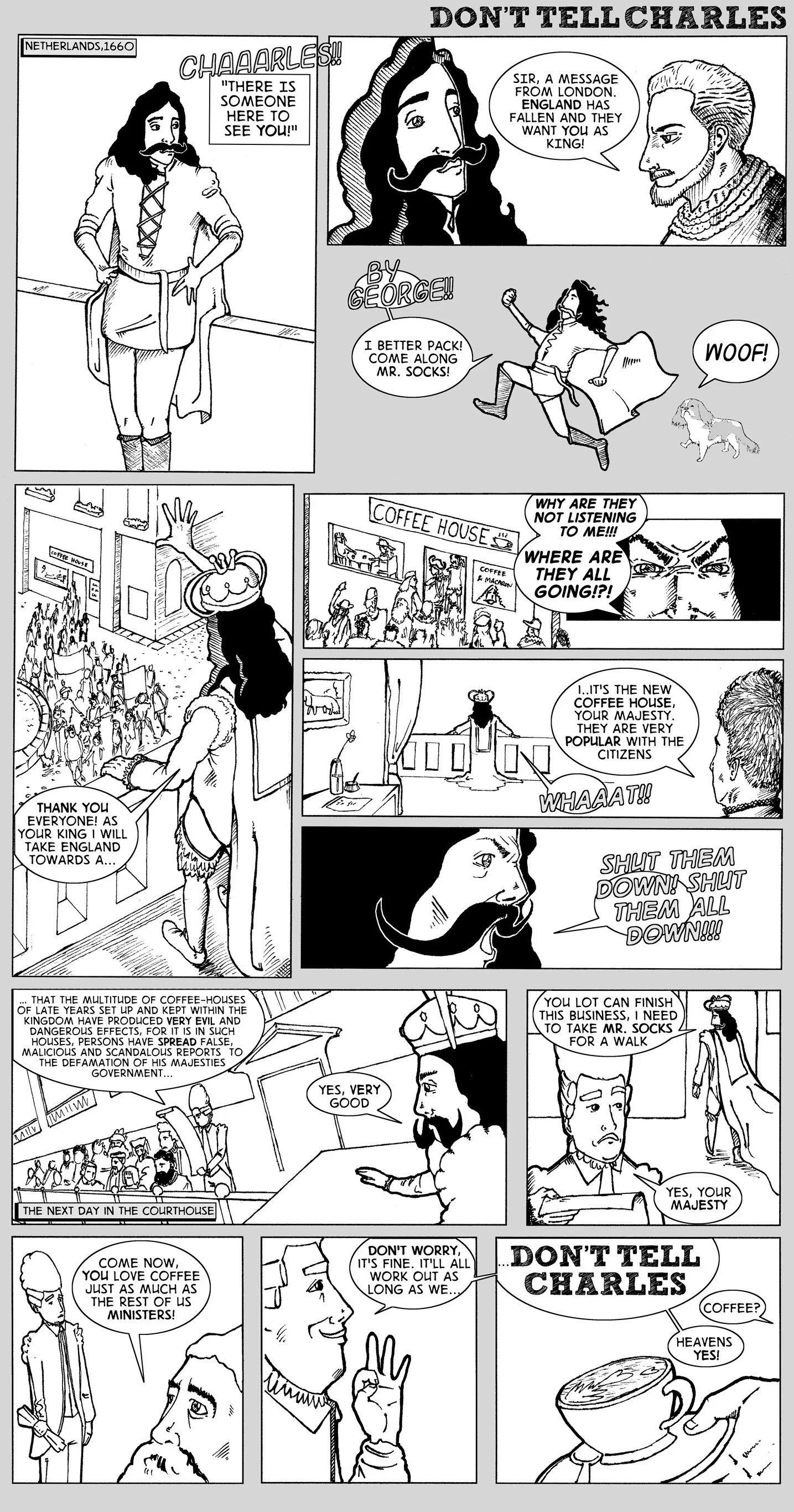
Illustration by Pocketbeagles. All rights reserved 2014.